
Technological evolution has led to an exponential increase in cyber threats. But with this growth, there has also been a response in terms of defense. At the center of this revolution is the combination of cyber security and artificial intelligence. But how is AI really affecting the world of cyber security? Let’s explore this relationship in depth together.
Real-time threat detection
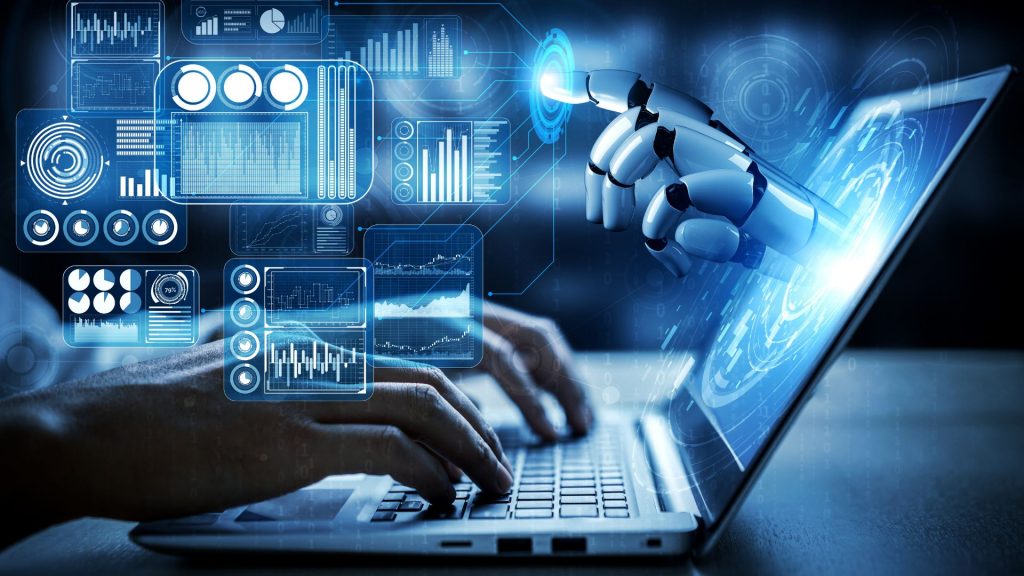
In a digital age of increasingly complex networks and a proliferation of connected devices, real-time threat detection has become critical to ensuring security. Thanks to Artificial Intelligence (AI), this detection has reached new levels of accuracy and speed, giving organizations a significant advantage in the fight against cyber threats.
AI Analysis and Processing Skills
AI is distinguished by its ability to analyze huge amounts of data in fractions of a second.
- Speed: Whereas a human can take hours, days or even weeks to analyze large data sets, AI can do so almost instantaneously, enabling near real-time sensing.
- Depth of analysis: AI can probe the depth of any data, identifying hidden patterns or anomalies that might escape the human eye.
Machine Learning (Machine Learning)
At the heart of AI-based threat detection is machine learning. This enables:
- Adaptation: Unlike traditional systems based on predefined rules, machine learning models continuously learn and adapt based on new data. This means they can identify new threats not yet known.
- Behavior modeling: Through behavioral analysis, AI can establish a “normal profile” of network traffic or user behavior. Any deviation from this profile can be flagged as potentially suspicious.
Semantic Analysis and Natural Language Processing (NLP)
The ability of AI to understand language and intentions can help in threat detection.
- Phishing and social engineering: Using NLP, AI-based systems can analyze the content of emails and other messages to identify phishing attempts or social engineering, even if the threats use new tactics or languages.-
Integration with other Systems
AI does not operate in isolation. It can be integrated with other security systems for even more effective detection.
- Synergy with IDS/IPS: By integrating AI with Intrusion Detection Systems (IDS) and Intrusion Prevention Systems (IPS), it is possible to create a multi-layered defense system that proactively detects and responds to threats.
Integration with other Systems
AI does not operate in isolation. It can be integrated with other security systems for even more effective detection.
- Synergy with IDS/IPS: By integrating AI with Intrusion Detection Systems (IDS) and Intrusion Prevention Systems (IPS), it is possible to create a multi-layered defense system that proactively detects and responds to threats.
Automatic response to threats
Early identification of a threat is only half the battle. The other half is about response: how do you actually respond to a threat once it has been detected? Here, the synergy between cyber security and artificial intelligence becomes a key ally, enabling organizations to respond in a proactive and timely manner.
Immediate interventions
Every second counts when it comes to responding to a cyber threat. A delay in response can mean the difference between a simple data breach and a catastrophic breach.
Real-time decisions: With the combination of cyber security and artificial intelligence, systems can make decisions based on instantaneous analysis, often in a fraction of a second after detecting a threat.
Blocking and isolation: One of the first lines of defense prevents access or further movement of a threat. This could mean blocking a suspicious IP, terminating a user session, or isolating a compromised device from the network.
Automation of the response process: While a person might take time to analyze and respond, AI-based systems can trigger predefined or customized response protocols, adapting to the type and severity of the threatened detection.
Simulation scenario
But how can organizations be sure that their responses are effective? Here, AI-based simulation comes into play.
Creating hypothetical scenarios: Using the power of artificial intelligence and cyber security, systems can create realistic threat scenarios, allowing organizations to test their responses in a controlled environment.
Adaptation and learning: After each simulation, AI systems analyze the results, learning from successes and mistakes. This continuous feedback loop improves future responses, ensuring that organizations stay one step ahead of threats.
READ ALSO: Ongoing cyber attack: how to prevent snake bite
Predictive analysis
Predictive analytics is a branch of statistics and artificial intelligence that uses historical data and algorithms to predict future events. This form of analysis is based on leveraging past and current data to identify patterns and trends, and, through the use of statistical models or machine learning, make predictions about what might happen in the future under certain conditions. It is also often used in various industries, such as marketing, finance, and health care, to make informed decisions and anticipate future trends or behaviors. In detail:
- Study trends: By analyzing historical data, cyber security and artificial intelligence can identify trends and patterns in threat behaviors, potentially predicting where and when the next attack will occur.
- Proactive adaptation: Based on this analysis, systems can proactively adapt to protect themselves from emerging threats.
Protection customization
Customization of protection refers to tailoring security measures to the specific needs of an individual or organization. Instead of applying standard security solutions to everyone, custom protection considers unique factors such as user behaviors, operating environment, specific risks, and other relevant aspects to provide tailored security coverage. This approach can result in a more effective defense because the protection measures are directly aligned to the specific needs and vulnerabilities of the protected entity. See applications:
- Ad hoc security profiles: Using cyber security and artificial intelligence, companies can create security profiles tailored to their specific needs and risks.
- Continuous feedback: AI can provide continuous feedback on how to improve safety postures based on the data collected.
READ ALSO: Website security: measures to protect yourself from hacker attacks
Conclusion
As cyber threats continue to evolve, the fusion of cyber security and artificial intelligence is emerging as one of the most effective defenses. Through real-time detection, rapid responses, predictive analytics and personalization, AI is truly revolutionizing the way we protect our digital information and assets. Organizations that embrace this synergy will be better equipped to meet the security challenges of the digital future.