
In the digital age, computer fraud has become one of the most significant threats to individuals and businesses. Characterized by the misuse or illegal use of information technology to deceive or steal resources, computer fraud can take many forms.
From phishing emails that aim to steal login credentials, to installing malware to control computer systems, these attacks are constantly evolving.
The effects of such fraud can be devastating, causing financial loss, reputational damage, and compromise of sensitive data.
Protection against cyber fraud is critical for both businesses and individual users.
For businesses, a security breach can lead to loss of sensitive customer data, operational disruptions, and serious financial and legal implications. For individuals, protecting their personal data is essential to safeguard privacy and prevent financial loss.
In this context, awareness and adoption of appropriate security measures become crucial to defend against the increasingly sophisticated strategies of cyber criminals.
The following article aims to provide a detailed understanding of what cyber fraud involves, how to recognize it, and the most effective strategies to protect against it.
Types of Computer Fraud
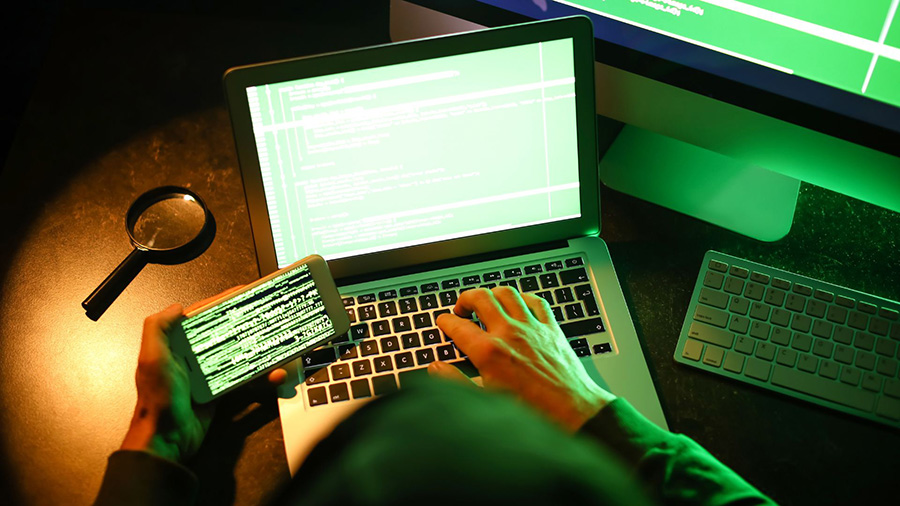
Computer fraud can manifest itself in various forms, each with specific characteristics and methods. Here are some of the most common types:
- Phishing: This technique involves sending fraudulent emails that appear to come from trusted sources. The goal is to trick recipients into revealing personal information, such as passwords or bank details. In 2022, 79% of companies in Italy experienced at least one phishing attack
- Man-in-the-Middle (MitM) Attacks: In these attacks, criminals intercept communication between two parties (e.g., between a user and a website) to steal or manipulate data.
- Malware: This term encompasses various types of malicious software, such as viruses, Trojans and ransomware, that are secretly installed on the victim’s device to damage it, steal data or block access to files until a ransom is paid.
- Social Engineering Attacks: These attacks rely on deception and psychological manipulation to induce victims to reveal confidential information or perform actions that compromise their security.
- Credit and ATM Card Fraud: Criminals use several techniques to steal credit card information, such as installing skimmers on ATMs or creating fake web pages to collect card data.
- Cryptojacking: This fraud involves the unauthorized use of others’ devices to mine cryptocurrencies.
- Identity Theft: Criminals collect personal information to impersonate the victim, access their bank accounts or commit fraud.
Recent and Relevant Examples of Computer Fraud
Let us now look together at some significant examples of computer fraud:
- Widescale Phishing Attacks: Recently, there have been reports of phishing campaigns targeting customers of major banking institutions, using emails that mimic official communications to induce victims to enter sensitive data on fake web pages.
- Ransomware in Businesses and Public Entities: Numerous public entities and private companies have been affected by ransomware attacks, with ransom demands for the recovery of encrypted data. Notable examples include attacks on hospitals, schools, and critical infrastructure. A 2022 report by CrowdStrike revealed a significant annual increase of 82 percent in data leaks related to ransomware attacks, with an average cost of 1.72 million per affected company
- Data Breaches of Large Corporations: Some of the largest companies globally have suffered data breaches where sensitive information of millions of users has been exposed or stolen.
- Cryptojacking on Popular Websites: Websites with high traffic have been compromised to secretly use visitors’ processing resources to mine cryptocurrencies, often without users noticing.
Discover our products for your cybersecurity
Tools Used by Fraudsters
Cybercriminals use a wide range of tools and techniques to commit fraud. Understanding these methods is critical to developing effective prevention strategies.
Common Software and Techniques
- Phishing: Attackers use spoofed emails, text messages or websites to trick victims into revealing personal information. These messages are often designed to appear to come from legitimate sources, such as banks or service providers.
- Malware: Includes a variety of malicious software such as viruses, worms, Trojans, and ransomware. These software can be distributed through email, downloads from compromised websites, or through infected USB storage devices.
- Social Engineering: This technique relies more on psychological manipulation than on technology. Attackers trick people into revealing confidential information or performing actions that jeopardize security.
- Keylogging: These software programs record keystrokes made by the user, allowing hackers to intercept passwords and other sensitive information.
- Exploit Kit: These are tools that exploit known vulnerabilities in software to install malware or perform other malicious actions.
How to Protect Yourself from Scammers
Digital Security Tools
Protecting one’s data and information systems requires a multilayered approach that includes various digital security tools. These tools are designed to defend against a wide range of threats, from prevention to identification and response to attacks.
- Firewall: Acts as a barrier between the protected internal network and the Internet. A firewall can be either hardware or software and is used to filter network traffic, blocking unauthorized access.
- Antivirus and Anti-Malware: These software programs are essential for detecting and removing viruses, worms, Trojans, and other types of malware. It is important to keep these programs up-to-date to protect against the latest threats.
- Intrusion Prevention Systems (IPS): They monitor network and data traffic to detect and block suspicious activities, such as hacking attempts and network attacks.
- Patch and Update Management: Keeping software up-to-date is crucial to protect against known vulnerabilities that can be exploited by attackers.
- Multi-Factor Access Control and Authentication (MFA): Restricting access to systems and data and using MFA adds an additional layer of security by requiring multiple forms of verification to access critical systems.
- Data Backup: Having regular and reliable data backups is critical to recovering information in case of ransomware attacks or other security incidents.
- Encryption: Protects data by making it unreadable without a decryption key. It is used to protect sensitive data both in transit (during transmission) and on-site (archived).
- Employee Training and Awareness: Training on security risks and best practices is critical, as human error is often the weak point in security defenses.
Importance of Cyber Security Devices
The importance of these safety devices cannot be underestimated.
In today’s digital landscape, where threats are constantly evolving and becoming more sophisticated, having a robust security system is essential.
These tools not only protect against financial loss and reputational damage, but also ensure the continuity of business operations. Moreover, for companies, ensuring the security of customer data is a legal and moral obligation that contributes to the company’s trust and credibility.
Conclusions
In this article, we explored several key aspects of cyber fraud, a growing threat in the digital age: Keeping systems up-to-date, using advanced security tools, and fostering a culture of cybersecurity are essential to protect both individuals and businesses from digital threats. In an increasingly connected world, cybersecurity is not just a matter of technology, but a crucial component of our daily lives.