
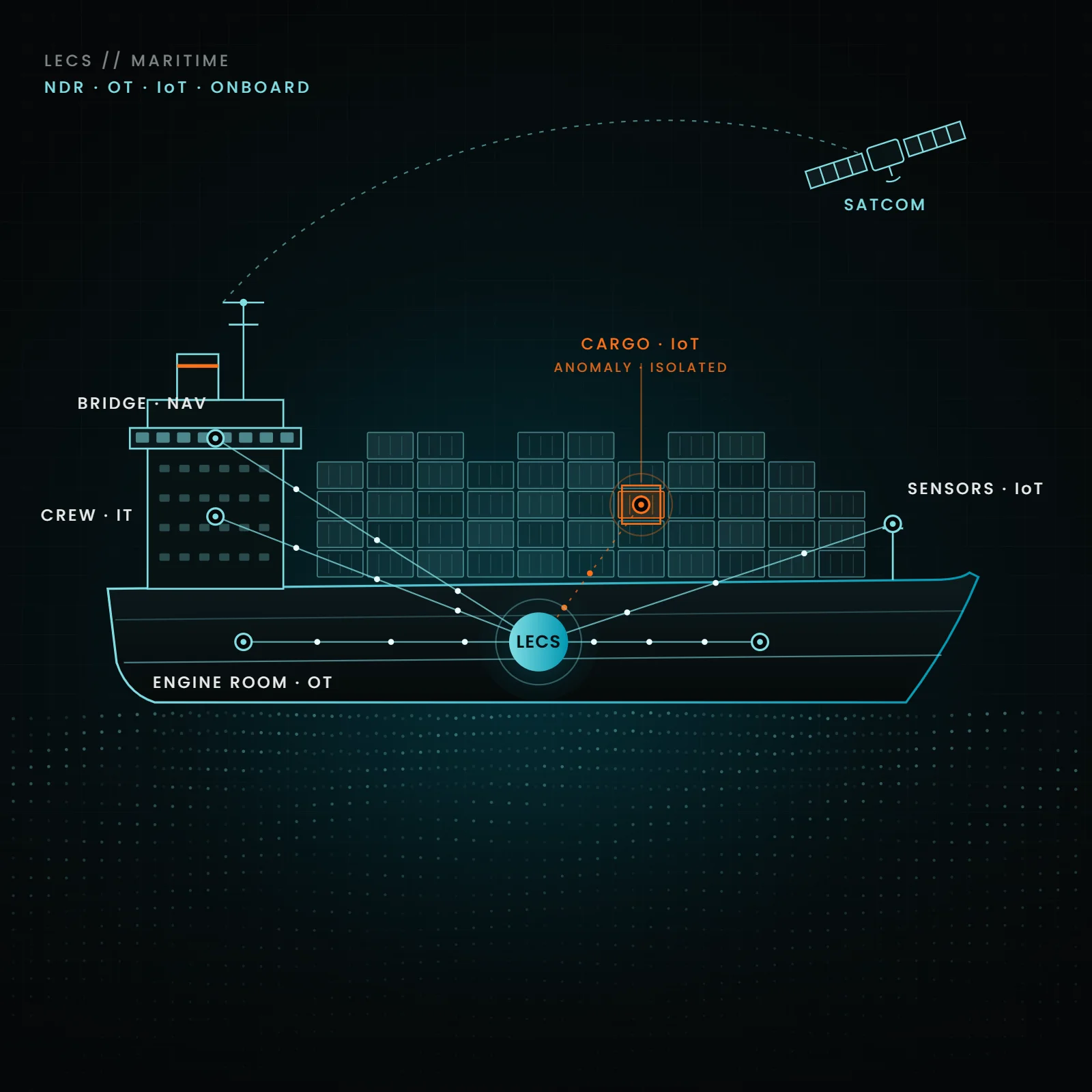
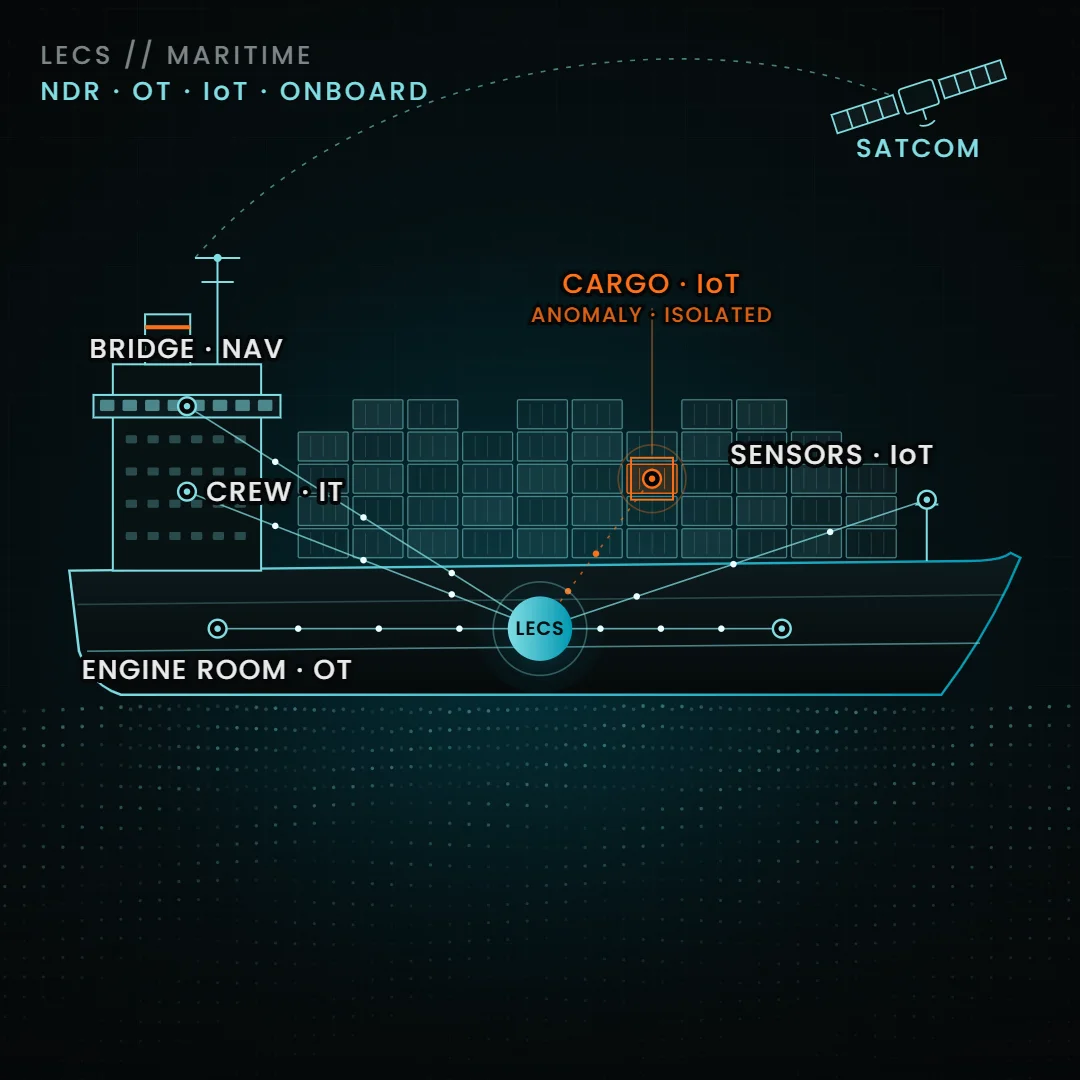
We turn the vulnerability of IT/OT protocols into invisible armor.
Monitored bridge equipment
Navigation protocols (native DPI with Antlia)
DPI according to IEC 61162 and NMEA specifications. Passive connection via mirror port, SPAN or TAP: no transmission, no changes to equipment, no vessel downtime. Continuous classification of network compliance with IEC 61162-460.
Typical scenario: device spoofing
A foreign host, such as a compromised maintenance laptop, presents itself on the bridge network as a GPS and transmits false positions.
Antlia flags a new source and a duplicate talker ID; physical plausibility checks detect the position jump and the disagreement with the redundant sensor.
The first alert reaches the LECS platform within seconds, with a structured log readable even by a SOC analyst without nautical expertise.
For ships contracted for construction on or after 1 July 2024, cyber resilience is a class requirement.
A cruise ship is a floating city: thousands of guests, digital services and OT systems sharing the same infrastructure.
Case study · ShipyardA shipyard specialising in explorer yachts and offshore vessels adopted LECS to protect its IT/OT networks. Installed in minutes, it immediately started detecting anomalies on OT protocols and protects systems from design to final testing, together with the intellectual property of the projects.
An attack on navigation or communication systems can compromise control of the ship. LECS analyses and blocks intrusions in real time.
In shipyards, custom projects and technical drawings are the most valuable asset. LECS prevents and blocks data exfiltration.
With limited satellite connectivity, LECS On-Premises defends autonomously even on the high seas.
No changes to existing configurations and no software to install: it also protects closed, complex systems.
Every security event is recorded in the logs, with notarization in Cloud versions where available, for audits, inspections and insurance.
Continuously updated global databases to recognise and block in real time the threats targeting the maritime sector.
Identifies anomalous commands or sabotage directed at propulsion systems that ordinary firewalls do not detect.
Blocks external infiltration and prevents exfiltration of sensitive data while at sea.
Detects suspicious deviations in data streams and applies patented countermeasures independently.
Protects without installing software, preserving the features of OEM-certified systems.
LECS applies automatic countermeasures on vulnerable devices in real time, safeguarding the integrity of the entire on-board network.
Once activated, LECS analyzes network traffic and protects every connected device without requiring advanced skills or complex configurations.
We do not rely on promises, but on internationally patented technology designed to operate in the most hostile environments where course continuity is the only goal.
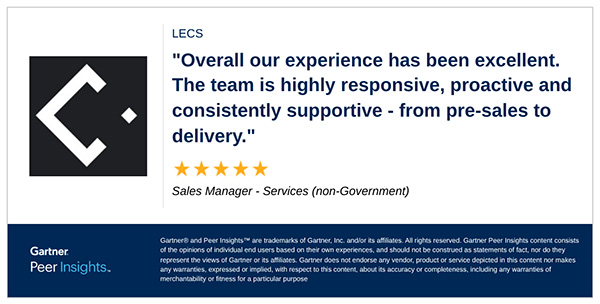
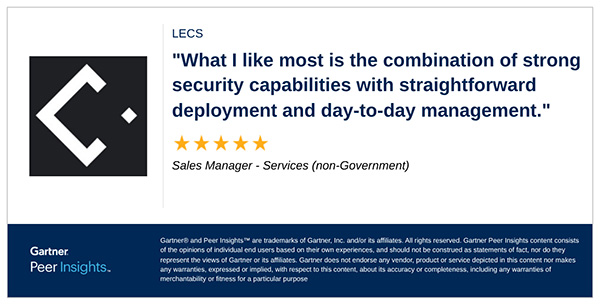
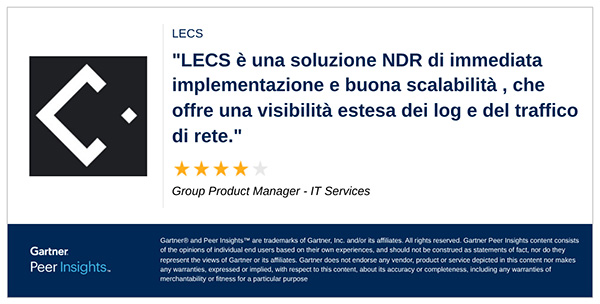
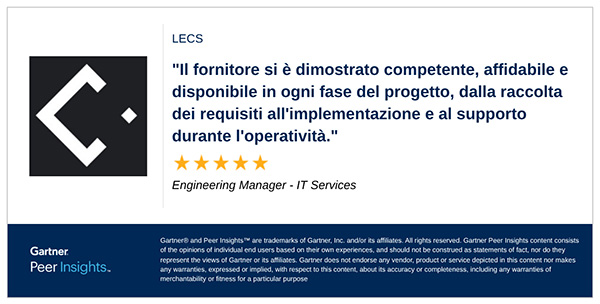
From the private unit to the large commercial fleet, an architecture that ensures route continuity.
Agile protection for small environments.
High performance for MEDIUM environments.
On-Cloud dashboard solution featuring superior computing power and traffic analysis capability to handle denser networks. Provides greater depth in log analysis for monitoring on-board systems.
Total On-Premises control for LARGE environments and critical infrastructure.
Designed to handle the highest volumes of traffic. Responds to restrictive policies by ensuring that logs never leave the infrastructure perimeter, as well as providing protection in the absence of connectivity.
No. LECS works in Stealth and Agentless mode: it analyses traffic passively, without interrupting services, and integrates with naval IT/OT infrastructure and OEM-certified systems without altering their configuration.
Yes. LECS can also be On-Premises. Tires-IA artificial intelligence resides locally, enabling the system to detect and block threats in real time even in the complete absence of external connectivity.
LECS monitors network movements, identifies silent threats and attempts to exfiltrate custom designs and technical drawings. Each event is also recorded in the logs, protecting corporate know-how.
No. LECS is a Plug & Play solution that installs in about 10 minutes. Thanks to agentless technology, there is no need to install any software on on-board devices or shut down critical systems, allowing the shipyard or owner to maintain full operations.
