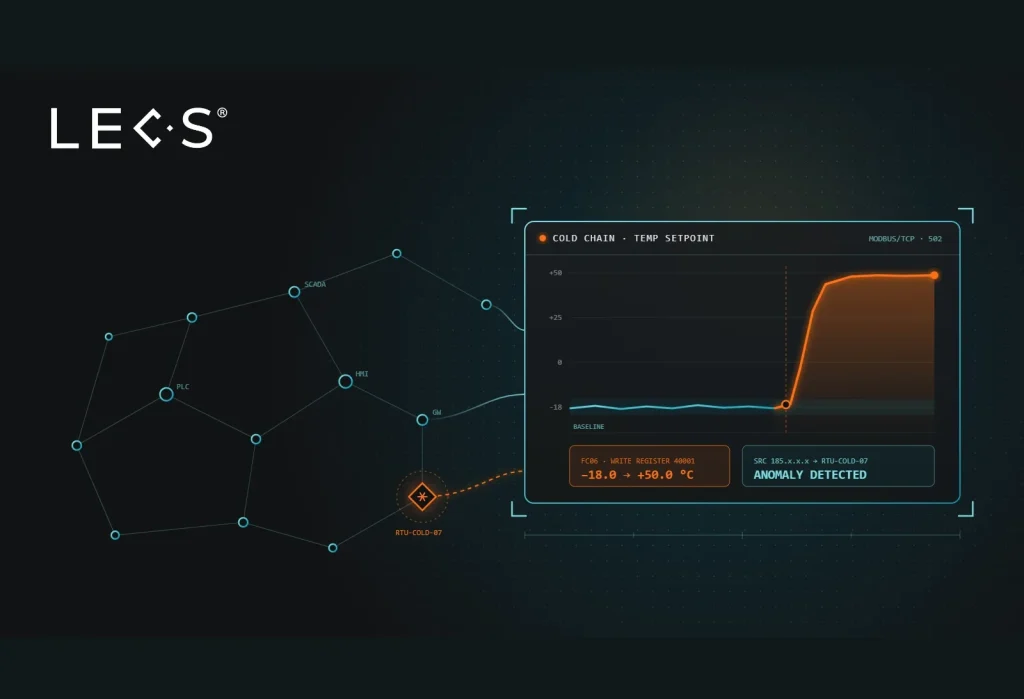

A connected industrial machine can be exposed to cyberattacks capable of compromising its operation and, in the most serious cases, its safety. An unauthorised command, a change to a PLC program or a compromised remote access can have consequences that go beyond the IT perimeter and directly affect production processes.
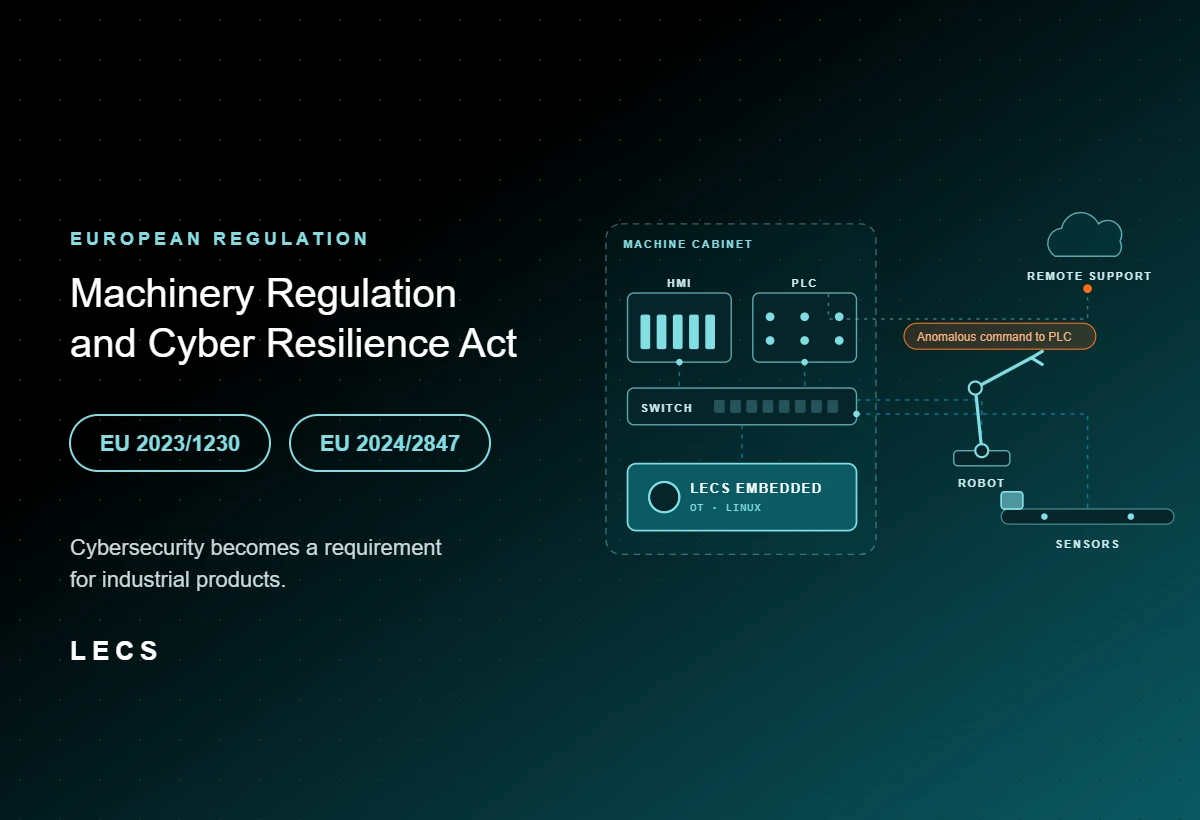
This is one of the reasons why the European Union has introduced two major regulations: the Machinery Regulation (EU) 2023/1230 and the Cyber Resilience Act (EU) 2024/2847, known as the CRA.
The two regulations address different but complementary aspects: the first integrates cyber risks into machinery safety, the second introduces cybersecurity requirements for hardware and software products with digital elements.
For manufacturers and industrial operators, understanding the differences is the first step to identifying responsibilities, technical requirements and the tools that help apply them.
Machinery Regulation 2027: what it is and what it requires
Regulation (EU) 2023/1230, which will replace Machinery Directive 2006/42/EC, will generally apply from 20 January 2027.
Its goal is to ensure that machinery and related products placed on the European market meet essential health and safety requirements, also taking technological developments into account.
One of the most significant changes is the recognition of cyber risk as a possible factor compromising physical safety.
Annex III introduces specific provisions on:
- Protection against corruption (section 1.1.9): safety-relevant hardware, software and data must be adequately protected against accidental or intentional alteration.
- Safety and reliability of control systems (section 1.2.1): control systems must be designed to prevent hazardous situations, including in the presence of reasonably foreseeable malicious attempts.
- Traceability of interventions: machines must collect evidence of interventions on software and configuration changes, as required by the applicable requirements.
In operational terms, it is no longer enough to consider only mechanical or electrical failure. It is also necessary to assess how a digital compromise could affect the behaviour of the machine.
A concrete example: a PLC controlling a production line receives a stop command or a change to its operating logic from an unexpected source. The event could come from authorised maintenance or from malicious activity.
Risk management therefore requires knowing the system’s communications, distinguishing legitimate from anomalous behaviour and putting in place protection measures consistent with the safety functions.
Cyber Resilience Act: what it is and how it works
The Cyber Resilience Act (CRA), introduced by Regulation (EU) 2024/2847, sets horizontal cybersecurity requirements for products with digital elements placed on the European market.
Its scope is broader than industry: it covers hardware and software products, including many connected devices and digital components used in production systems, subject to the exclusions set out in the regulation.
The underlying principle is security by design and by default: cybersecurity must be built into product design and maintained throughout its life cycle, not added only after a vulnerability appears.
The CRA requires manufacturers, where and as applicable, to:
- assess the cybersecurity risks associated with the product;
- design products with a level of security appropriate to the identified risks;
- reduce known vulnerabilities and the attack surface;
- handle vulnerabilities and provide security updates during the support period;
- prepare technical documentation and conformity assessment procedures;
- report actively exploited vulnerabilities and severe incidents affecting the security of the product, where required.
The main provisions of the CRA will apply from 11 December 2027, but some obligations are already in force.
Since 11 September 2026, the manufacturers concerned must notify actively exploited vulnerabilities and reportable severe incidents, with an early warning within 24 hours and a full notification within 72 hours of becoming aware of the event, under the conditions set out in Article 14.
Meeting these obligations requires organised processes for vulnerability handling, collection of incident information and timely response.
Machinery Regulation and CRA: what are the differences?
The two regulations are not alternatives.
The Machinery Regulation focuses on machine safety and on the risks that a cyber compromise can pose to people or to the safe operation of the system.
The Cyber Resilience Act instead covers the cybersecurity of the digital product, from design to vulnerability handling during the support period.
An industrial machine with digital components may fall within the scope of both regulations. In that case, the manufacturer must check the requirements applicable under each, also considering possible overlaps.
There is, however, a common element: the need to know the digital components, understand their interactions and assess the risks associated with communications and vulnerabilities. This is where industrial network monitoring technologies can make a concrete contribution.
How LECS supports compliance with the Machinery Regulation and the CRA
LECS is the cybersecurity platform developed by Cyber Evolution that combines Network Detection & Response, industrial protocol analysis and Asset Intelligence.
Through the VEGA, ANTLIA and ORION modules, LECS makes it possible to observe communications in IT and OT infrastructures, identify devices and anomalies and collect information useful for risk management. These capabilities can support the implementation of some technical controls relevant to both regulations.
1. Know your assets and their communications with ORION
An up-to-date device inventory is key to identifying exposed components and assessing their risks.
ORION, the LECS module dedicated to Asset Intelligence, passively identifies the assets observed on the network, without installing agents on devices and without running vulnerability assessment scans. SNMP enrichment queries are optional, limited to configured targets and disabled by default.
The platform collects information on detected systems, communications and services in use. Advanced features also associate information on known vulnerabilities, asset risk and relationships between devices.
This supports activities such as analysing the exposure surface, spotting unexpected devices and prioritising interventions.
ORION also makes it possible to model Zones and Conduits according to the IEC 62443 approach, defining authorised communications between different network areas and generating notifications when flows that do not comply with the configured rules are observed.
This helps verify communications and segmentation policies, without replacing the security controls that must be implemented in the infrastructure.
2. Monitor industrial commands and anomalies with ANTLIA
In OT environments, not all suspicious activity can be recognised with traditional IT security tools. An industrial command can be formally valid at protocol level yet anomalous in its operational context.
ANTLIA, the LECS module specialised in analysing OT, IoT and IoMT communications, interprets the supported industrial protocols up to application level. This makes it possible to detect, among other things:
- critical industrial commands and unexpected operations;
- changes to PLC programs, when detectable in the monitored protocols;
- anomalous communications between IT and OT environments;
- deviations from the usual behaviour of devices;
- lateral movement attempts and other activity linked to industrial attack techniques, classified according to MITRE ATT&CK for ICS.
Monitoring these activities can provide useful elements to promptly identify situations that need further investigation, including when they could affect the safe operation of machines.
3. Detect suspicious network activity with VEGA
The convergence of IT and industrial networks makes it important to also monitor what happens before a threat reaches the production system.
VEGA, the Detection & Response component of LECS, analyses network traffic to identify anomalies and potentially malicious behaviour.
Combined with ANTLIA and ORION, it helps reconstruct the context of communications between IT and OT systems, providing useful information for event analysis and incident handling. Correlating information from different segments helps security managers assess an event not only on the single device, but across the monitored infrastructure.
4. Collect technical evidence for audits and incident handling
Compliance also requires the ability to document the measures adopted and demonstrate their effectiveness.
LECS provides dashboards, events, notifications, reports and integration via Syslog (CEF, LEEF and JSON formats) and, in Cloud versions, via the LECS Partner API.
These tools collect information on observed anomalies, the devices involved and relevant communications. The evidence produced can contribute to risk analysis, control verification, incident investigation and audit preparation.
It is important to distinguish this contribution from the mandatory documentation required by the regulations: information collected through monitoring does not, on its own, replace the conformity assessment, the manufacturer’s technical file or vulnerability handling procedures.
For machine builders, LECS OEM-Embedded brings this monitoring directly on board newly manufactured machines.
From regulatory compliance to operational security
The Machinery Regulation and the Cyber Resilience Act introduce specific responsibilities for the parties concerned and call for a cybersecurity approach that accompanies the product from design to vulnerability handling.
To meet these obligations, organisations need to combine risk assessment, secure design, procedures, documentation and technical controls.
LECS contributes to this path by making devices, communications and anomalous behaviour in IT and OT networks observable. The combination of Network Detection & Response, industrial protocol monitoring and Asset Intelligence provides operational information to understand infrastructure exposure, detect suspicious events and verify some security controls.
Compliance remains the responsibility of the obliged parties and does not follow automatically from adopting a technology platform. But reliable information on the behaviour of connected systems is an important support in meeting the security requirements introduced by the new European regulations.
Want to find out how LECS can support the cybersecurity of your industrial infrastructure and your compliance journey?